On this page
Educating for equality aims to provide Australian universities with a whole-of-university approach that can help guide, support and build upon existing work to promote gender equality and prevent gender-based violence.
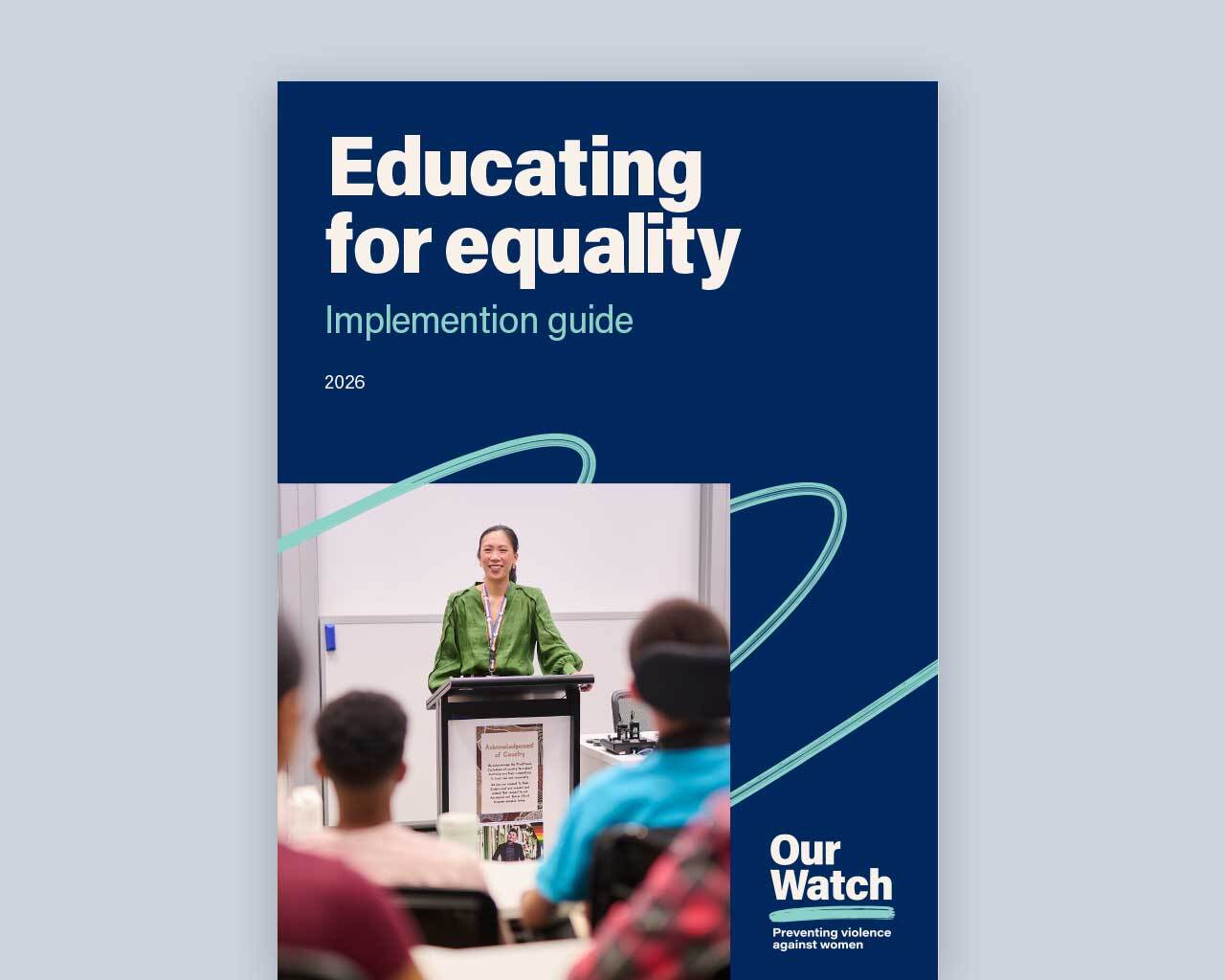
Educating for equality
This updated version (published January 2026) aligns to current higher education sector needs and contexts, including to the National Higher Education Code to Prevent and Respond to Gender-based Violence.
The Educating for equality whole-of-university approach is designed to:
- provide practical tools, guidance and resources to support universities meet obligations under the National Code and address the drivers of gender-based violence in their university context
- draw together the entire university community in a shared commitment to the prevention of gender-based violence
- support a primary prevention approach in universities that is holistic and underpinned by a long-term strategy and sector coordination
- highlight the role everyone within a university has to play in creating a culture where rigid gender stereotypes are challenged, gender-based discrimination is unacceptable and gender equality is actively promoted and modelled.
Educating for equality draws on the national and international evidence base including Change the story – Australia’s national framework for the prevention of gender-based violence.
The domains: Where universities can create change
Taking a whole-of-university approach means making sure messages and actions are reinforced in all areas of the university. That’s why Educating for equality is framed around five key domains.
If universities promote a culture of equality and respect across these areas, they can address the drivers of gender-based violence.

The key levers: How universities can create change
Universities have significant influence in shaping safe, respectful and inclusive communities. By leveraging their values, systems and expertise, they can drive meaningful, lasting change that advances gender equality and helps prevent gender-based violence across all areas of university life and beyond.
Sustainable change is strongest when all three key levers are resourced and addressed. By aligning values and culture, structures and policies, and prevention practice, universities can build on their strengths and foster meaningful impact across the institution.

The Educating for Equality model highlights three key levers that support a whole-of-organisation approach:
Key lever 1: Values and culture
A university’s values frame how it sees itself, how others see the university and its approach to all its activities.
Universities can impact values and influence culture by:
- recognising and upholding the significance of lived experience
- embedding gender equality and respect into recruitment, role design, staff performance reviews, university values and codes of conduct
- settling and modelling expected behaviours across leadership and the wider university community
- developing policies, plans, communications and campaigns which contribute to a culture of respect
- developing and delivering learning engagement activities.
Key lever 2: Structures, strategy and policies
Universities have the power to reshape structures that can actively prevent gender-based violence and promote gender equality.
Universities can contribute to structural, strategic and policy change by:
- embedding gender equality and primary prevention into their strategic plans, for example, gender impact assessments
- reviewing structures and systems to ensure that they provide equal opportunities and support leadership opportunities for all women and gender-diverse people
- collaborating, engaging and consulting with community experts and those with lived experience
- aligning strategies with prevention and response plans.
Key lever 3: Prevention practice
Effective prevention requires dedicated expertise, sustainable investment and coordinated action across the institution.
Universities can contribute to structural, strategic and policy change by:
- investing in an adequately resourced prevention workforce with dedicated expertise, across all domains
- collaborating and engaging with student and staff communities in fit-for-purpose and evidence-based prevention strategies
- developing whole-of-university prevention plans with ongoing evaluation
- supporting and encouraging collaboration between universities and across the sector
- supporting staff and students in learning and development opportunities which increase their prevention skills, knowledge and education.
Implementing Educating for equality
Implementing Educating for equality involves a 5-step cycle, which may need to repeat with the development of new prevention related plans.
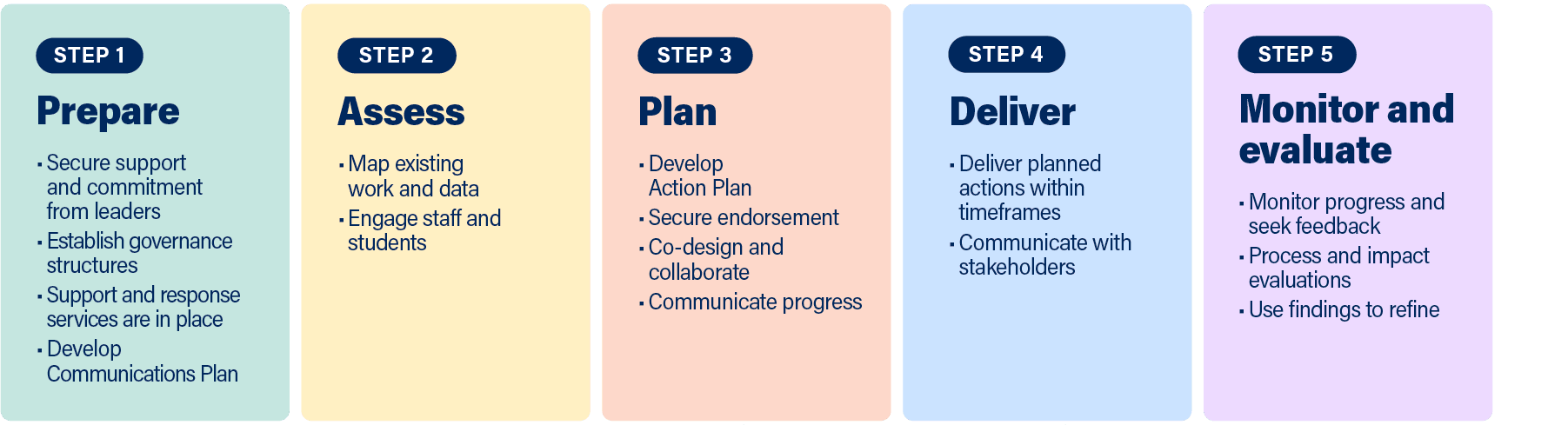
Step 1: Prepare
- Secure support and commitment from leaders.
- Establish governance structures.
- Support and response services are in place.
- Develop a communications plan.
Step 2: Assess
- Map existing work and data.
- Engage staff and students.
Step 3: Plan
- Develop Action Plan.
- Secure endorsement.
- Co-design and collaborate.
- Communicate progress.
Step 4: Deliver
- Deliver planned actions within timeframes.
- Communicate with stakeholders.
Step 5: Monitor and evaluate
- Monitor progress and seek feedback.
- Process and impact evaluations.
- Use findings to refine.
Stay up to date with Our Watch’s current work and updates for the sector by signing up to our Prevention in Universities newsletter.
Webinars
The Educating for equality webinar series explores each domain of the university, supporting a whole-of-university approach to preventing gender-based violence. Explore the webinars below or view on YouTube here.
Strengthening prevention through meaningful engagement with students
Video 1/4 1 hr 19 min watch

Universities as workplaces – leading change to prevent gender-based violence
Video 2/4 1 hr 12 min watch
Related
2 resources
This tool is designed for universities undertaking a whole-of organisation assessment of progress towards preventing gender-based violence.

13 resources
The Prevention in teaching and learning resources support action in the 'teaching and learning' domain of Educating for equality.