On this page
Violence against women is an issue that affects all communities across Australia.
The role of local government in primary prevention
Local governments play an important role in enhancing the health and wellbeing, social connections and safety of everyone in their community, so that all women, families and communities can live free from violence.
There are four key opportunities for council to prevent violence against women outlined in the Municipal Association of Victoria (MAV)'s Local government guide for preventing family violence and all forms of violence against women:
- council leadership and decision-makers
- council as a service provider
- council as a workplace
- council as a community connector.
Explore our factsheets to learn more about opportunities for preventing violence against women in these areas and examples of actions that councils across Australia have taken.
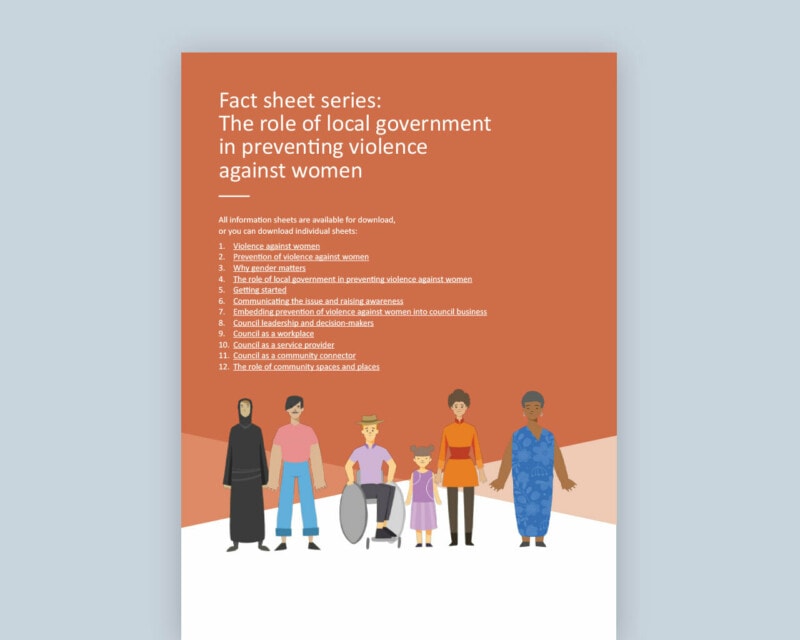
12 resources in this collection
12 factsheets to support councils to prevent violence against women and promote gender equality.
The benefits of prevention for local government
Councils benefit from engaging in prevention by:
- implementing gender equality policies and practices supports accessible, inclusive and productive workplace cultures, making councils better places for everyone to work in.
- becoming an employer of choice, appealing to a wider range of prospective employees
- increasing the representation of women from diverse backgrounds in leadership roles, which brings new perspectives to leadership and ensures councils are more representative to their community
- improving engagement with their communities
- improved access by all community members to council services, programs, facilities and open space
- improved community perceptions of social connectedness and safety
- supports state, territory and national gender equality legislation and reforms
- improved community perceptions of council in meeting community needs and expectations of equality for all genders, ages, identities and abilities.
What councils can do
Practical actions that councils can take to prevent violence against women include:
- consider how council decisions, policies, programs and services will impact women, men and gender diverse people. This can be embedded into existing processes for developing policies, programs and services for the community and for the council as a workplace. Gender equity audit tools can support this.
- use gender-disaggregated data to consider the experiences of men, women and gender diverse people in your community and Council as a workplace. Where possible, this data should also be disaggregated by factors such as race, religion, sexuality, disability status and socioeconomic demographics, recognising that not all people will experience gender equality in the same way.
- implement council policies, services, programs and partnerships that focus on gender equality
- Councillors and senior leaders show leadership and modelling gender equality through their language, actions and decisions
- provide guidance and support for preventing violence against women in the community, which could include community campaigns, events, or community grants
- ensure community consultations are accessible to people with a wide range of experiences and perspectives and that everyone has a way to voice their views
- establish partnerships or a network with local organisations that are committed to preventing violence against women, or integrate this focus into existing partnerships or networks
- councils who are more established in this work could develop a Gender Equality Plan or a Plan to prevent violence against women. These plans highlight councils leadership commitment to preventing violence against women.
These and other steps can help to ensure that council decision-making includes a focus on gender equality, within a wider vision for a safe, thriving and inclusive community.
Case studies
Many local governments across Australia have already started their journey towards preventing violence against women in their workplaces and communities.
Check out the MAV's Promising Practice Portal where Victorian councils have shared practices, projects and plans they have developed to support gender equality and the prevention of violence against women.
Related
12 resources in this collection
12 factsheets to support councils to prevent violence against women and promote gender equality.

Tips to get started in the prevention of violence against women in your local council.