On this page
Gender inequality sets the underlying context for violence against women. There are four factors that consistently predict or ‘drive’ violence against women:
condoning of violence against women
men’s control of decision making and limits to women’s independence in public and private life
rigid gender stereotyping and dominant forms of masculinity
male peer relations and cultures of masculinity that emphasise aggression, dominance and control.
Councils are uniquely positioned to address these drivers as an arm of government and as large local workplaces.
Gender equality audits and action plans
A gender equality audit and action plan can help to systematically identify the current situation, what local government would like to change and how that change could happen.
A gender equality audit is a tool used to collect data, measure change and provide an evidence-base to identify opportunities to address gender inequality and plan actions to prevent violence against women.
Councils might also start by selecting specific issues to address like the gender pay gap or ensuring that all children have equal access to sports venues regardless of their gender. The audit tool is also a good option if councils want to take a comprehensive approach or are not sure where to focus.
Explore these factsheets for examples of other councils' action plans and strategies.
What is a gender equality action plan?
Use the findings of the audit to develop objectives and actions to address the gender inequalities found. The action plan should identify the priority areas the overall objectives, the indicators of success, the resources required, who is responsible and the timelines.
It’s helpful to link a gender equality action plan to your councils overarching strategy or plan. Try and identify a priority area that the gender equality action plan aligns with and supports, such as safer communities or community health and wellbeing. This will help integrate the commitments and actions to promote gender equality into existing local government business and more it more likely your council will implement and report on progress against these actions.
Tailor the action plan to your local governments understanding of preventing violence against women and stage of readiness to engage in this work.
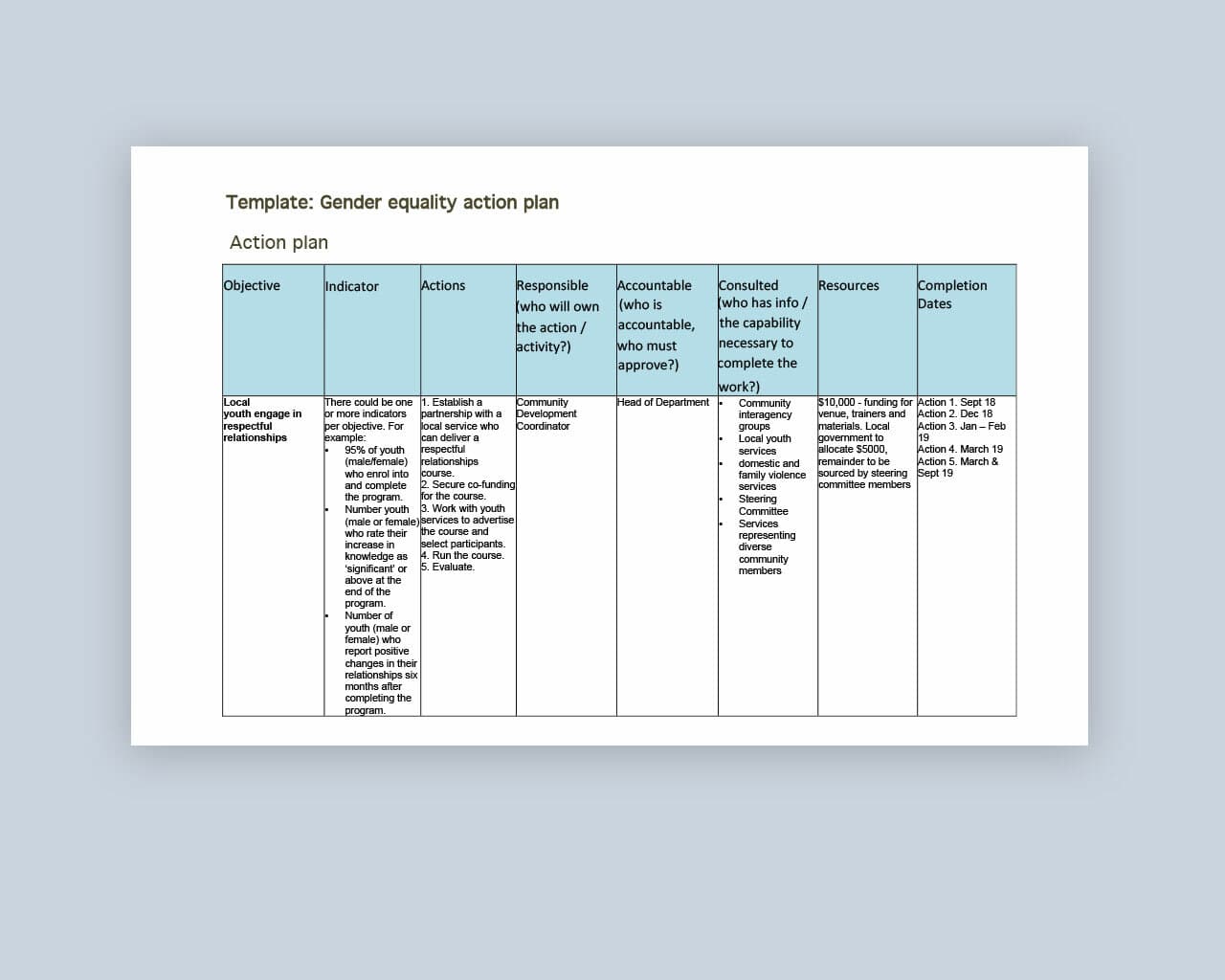
Gender equality action plan
Staff resourcing and communication
It is recommended that councils establish a working group to develop and oversee the implementation of gender equality actions, to ensure engagement from teams across council.
This could be an internal group involving only council staff, or could also include community organisations who are also committed to preventing violence against women and gender equality. Opportunities to strengthen staff engagement in this work includes:
create opportunities for staff consultation on the action plan or policy development
identify interested colleagues to be ‘champions’ and support the implementation of the activities across council
communicate council's commitment to preventing violence against women and the role of local government in preventing violence against women. The communication assets for local government has templates and examples you can use or adapt for your council.
provide access to resources, training and professional development on preventing violence against women and the role of council in preventing this violence, including information for staff to respond to disclosures, backlash and understand the role of bystanders.
hold discussion groups about workplace gender equality to create a culture that normalises these workplace conversations.
Case study
City of Parramatta: Undertaking gender analysis with local government teams
The City of Parramatta conducted a gender equity audit to help them understand the gendered nature of the council’s services. The project officer worked with the leaders of two council teams to explore the percentage of girls and women that were participating in their programs.
One of those teams was the Recreation and Facilities team who had been running a Girls in Sports program for six years to increase the participation of girls in their sports clubs. The team wanted to know the percentage of girls participating over the six years and the numbers and kinds of activities that were targeted at girls or boys.
The analysis showed that even though there were more young people participating overall, the percentage of girls participating had not increased. The project officer worked with the team to identify some further actions they could take, such as working towards challenging the stereotype that ‘girls don’t play sport.’ They decided to do this by utilising Council’s partnerships with professional sports teams to develop promotional videos and images of professional female sportspeople that they could use throughout their promotional material and social media channels.
They also identified opportunities to work with their coaches to make sports workshops inclusive of more girls and ensure that girls are actively participating (for example, ensuring the ball gets passed to them).
Related
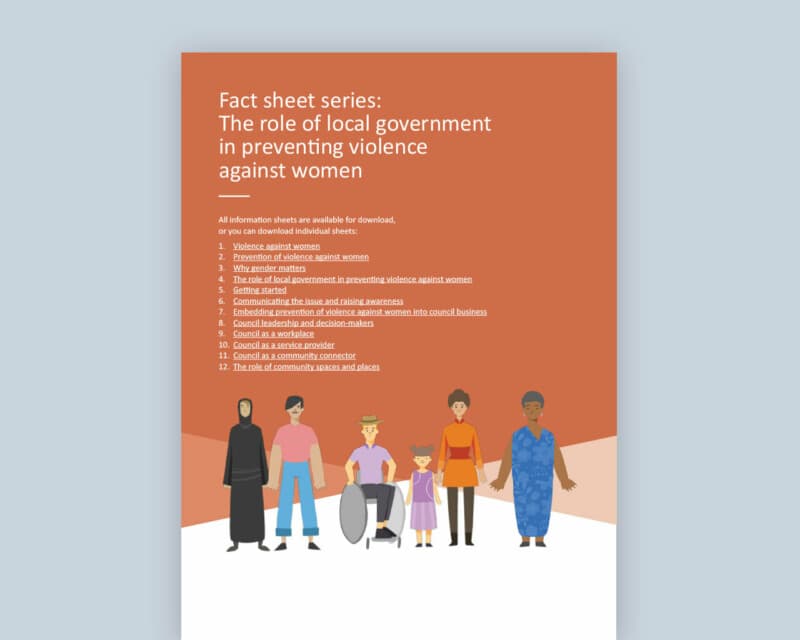
12 resources in this collection
12 factsheets to support councils to prevent violence against women and promote gender equality.